Fortnite Reload Ranked grind from Zero to Unreal proves how fast the climb can be
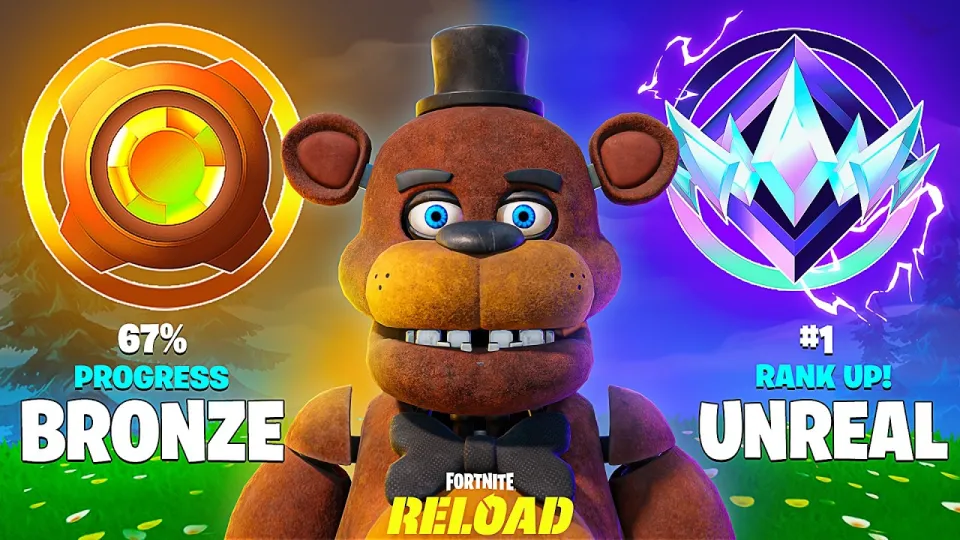
Video: I Played 24 HOURS for UNREAL! (Reload Speedrun on Day 1)
You can order the same kind of articles for your own video to boost it on YouTube and Google. Just message the Telegram bot @sat_sit_bot. Articles with your video embedded are written and posted by the bot itself — on popular topical sites (no ads). Free trial — 50 articles.
· based on the channel TG Plays
Key takeaways
- Reload Ranks reset on day one of the new season, wiping every player back to the bottom of the ladder.
- The goal of the run was to climb from zero all the way to Unreal in Fortnite Ranked Reload.
- The attempt ran for 24 hours straight on the first day the mode's ranks were live.
- Ranked Reload uses the same eight-tier ladder as Battle Royale, with Unreal as the top tier.
- The run was published on October 9, 2026 as a full-day ranked challenge on TG Plays.
Fortnite Ranked Reload resets put every player back at the bottom of the ladder, and the fastest documented way back to the top is a zero-to-Unreal climb in a single sitting. In a 24-hour day-one run, TG Plays took the Reload ladder from the lowest rank to Unreal, the game's highest tier, while the rest of the player base was still fighting through the early divisions. You can follow the creator's Fortnite maps and updates through his Epic creator page, where new builds and mode drops appear first.
How the Fortnite Reload ranked reset changes the climb
A Reload rank reset is not a soft drop: every account restarts near the bottom, so the first hours of a new season are the hardest lobbies in the mode. Because placement points and elimination points are the only way up, the early divisions fill with players who normally sit in Elite, Champion and Unreal, all grinding the same low-rank matches.
That is the core reason a day-one Unreal push is so demanding. The skill level of the lobby does not match the rank badge on screen, so a player has to win consistently rather than simply survive. Reload's respawn system softens the punishment for individual deaths, but it also means fights last longer, third parties arrive faster and the final circles are crowded.
What a 24-hour zero-to-Unreal run actually involves
Climbing from the bottom tier to Unreal in one day requires a fixed routine rather than raw aggression. The structure that makes a run like this work looks roughly like this:
- Play Reload in a fixed squad or duo so callouts and loot sharing stay consistent across hundreds of matches.
- Land in contested but compact POIs where early eliminations are cheap and rotations are short.
- Bank placement points first, then chase elimination points only when the squad is fully geared.
- Take short breaks on a timer instead of quitting after a loss streak, because fatigue costs more rank than a bad drop.
- Track the percentage progress toward the next division so the pace can be adjusted mid-run.
The last point matters more than it sounds. Watching a progress bar crawl toward the next tier is the emotional core of any long ranked session, and the difference between 99% and a finished division is one clean endgame.
Why Ranked Reload feels harder this season
The most common complaint around the mode right now is that ranked Reload lobbies feel sweatier than they used to. There are concrete reasons for that: the reset compresses the skill pool, the mode's shorter match length encourages aggressive pushes, and the seasonal event layer adds players who are grinding for event rewards rather than rank.
Fortnitemares timing makes it worse. When a seasonal event overlaps with a fresh ranked reset, casual players and ranked grinders share the same queues, so mid-tier lobbies can suddenly contain Champion-level squads. The practical effect is that a climb which felt routine last season now demands near-perfect endgame decisions.
Fortnite Reload rank tiers and how points are earned
Ranked Reload follows the same eight-tier structure as the main Battle Royale ranked mode: Bronze, Silver, Gold, Platinum, Diamond, Elite, Champion and Unreal. Each tier below Unreal is split into three divisions, and progress is shown as a percentage inside the current division.
Points come from two sources. Placement points reward surviving deep into the match, with the biggest payouts for top finishes and victory royales. Elimination points reward confirmed kills, and their value scales with the opponent's rank, so beating a higher-ranked squad in a stacked lobby is worth more than farming lower divisions. Unreal itself has no divisions, only a leaderboard position, which is why reaching it is a milestone rather than a stopping point.
Common questions from players chasing Unreal
Players attempting their own zero-to-Unreal push tend to hit the same walls. The most frequent doubts are about time, squad size and whether the mode's respawn mechanic helps or hurts the climb.
- Time: a full day is enough for a strong player in a consistent squad, but solo queue usually turns the same attempt into a multi-day project.
- Squad size: duos and trios offer the best balance, because fights are winnable without the chaos of full squads.
- Respawns: they reduce the cost of a single mistake but increase the number of fights per match, which raises both risk and point potential.
- Tilt: losing a division at 90% is normal, and the players who reach Unreal are the ones who queue again instead of reviewing the loss for an hour.
All links from the run
- Fortnite creator page for maps and updates: https://www.fortnite.com/@TypicalGamer
- JOGO studio page: https://www.fortnite.com/@JOGO
- Discord community: https://discord.gg/TypicalGamer
- Twitter: https://twitter.com/TypicalGamer
- Instagram: https://instagram.com/typicalgamer
Final thoughts on the Fortnite Reload zero-to-Unreal challenge
A day-one climb to Unreal in Fortnite Reload is less about mechanical skill than about consistency across dozens of matches. The reset creates a short window where the ladder is compressed, and the players who exploit that window are the ones queuing immediately with a fixed squad and a clear plan. TG Plays documented the full 24-hour attempt on the channel, from the first Bronze lobbies to the final push, and the run doubles as a practical template for anyone planning their own ranked sprint. If you want to see the maps and modes behind that grind, start at the TypicalGamer Fortnite creator page and follow the profile before the next reset drops.
Source: I Played 24 HOURS for UNREAL! (Reload Speedrun on Day 1) · Markdown version
Questions & answers
How long does it take to reach Unreal in Fortnite Reload?
For a strong player in a consistent duo or trio, a single long session of around 24 hours can be enough right after a reset, when the ladder is compressed. Solo queue players usually need several days because every loss costs progress and random teammates add variance. The pace depends far more on win rate than on raw kill count.
Does Ranked Reload use the same ranks as Battle Royale?
Yes. Reload uses the same eight-tier ladder: Bronze, Silver, Gold, Platinum, Diamond, Elite, Champion and Unreal. Tiers below Unreal are split into three divisions with a percentage progress bar, while Unreal is a single tier with a leaderboard. Points come from placement and eliminations, with elimination value scaling by opponent rank.
Why are ranked Reload lobbies so hard at the start of a season?
A rank reset pushes every account back toward the bottom, so high-skill players share the early divisions with everyone else. Overlapping seasonal events make it worse by pulling casual players into the same queues. The result is that low-rank matches can contain Champion and Unreal-level squads for the first few days.
Is it better to play Reload solo or with a squad for a rank push?
Duos and trios are the most efficient choice. Reload's respawn system keeps fights going longer, so coordinated callouts and shared loot matter more than in a standard Battle Royale match. Solo queue removes the coordination advantage and makes every endgame a coin flip against stacked teams.