Rust trio control a server by combining 40,000 hours of experience with fast wipe progression and constant pressure
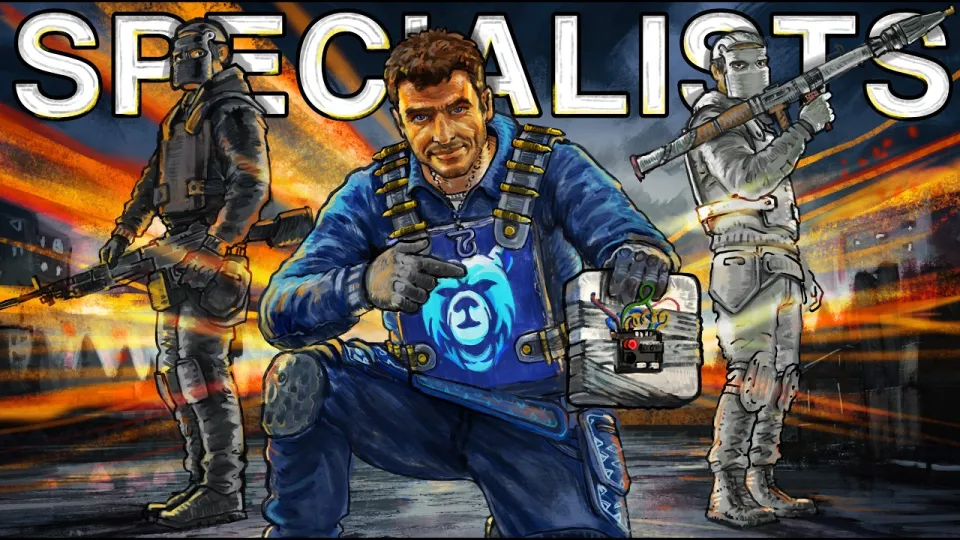
Video: How a 40,000-Hour Trio CONTROLS a SERVER - Rust
You can order the same kind of articles for your own video to boost it on YouTube and Google. Just message the Telegram bot @sat_sit_bot. Articles with your video embedded are written and posted by the bot itself — on popular topical sites (no ads). Free trial — 50 articles.
· based on the channel Blooprint
Key takeaways
- Blooprint, Disfigure and Nine bring roughly 40,000 combined hours of Rust experience into one trio.
- The wipe runs on a 500+ population server, where competition for monuments and raids is constant.
- The trio's advantage is not aim alone: it is early progression, base layout and coordinated raid timing.
- Raiding every competitor is the stated goal once the trio gets ahead in gear and explosives.
- Blooprint streams the same style of play live on Twitch, where the wipe's decisions play out in real time.
A Rust trio controls a server by converting hours of accumulated game knowledge into speed: faster early progression, better base placement and enough explosives to raid competitors before they can organize. In the Blooprint video "How a 40,000-Hour Trio CONTROLS a SERVER - Rust," the group of Blooprint, Disfigure and Nine turns a wipe with no big ambitions into full dominance of a 500+ population server. You can follow the same playstyle live, including wipes and raids, on Blooprint's Twitch channel.
What 40,000 hours actually buys a Rust trio
Experience in Rust shows up as fewer wasted minutes, not as magic aim. A trio with tens of thousands of combined hours already knows which monuments to contest on day one, how much scrap a workbench path costs, and when a fight is worth taking. That knowledge compresses the early wipe: less time lost to bad decisions, more time spent farming and crafting with a clear next step.
The three players also split roles naturally. One pushes progression and crafting, one handles scouting and map awareness, one anchors fights and calls rotations. On a 500+ pop server, where every monument is contested and every loud fight draws third parties, that division is what keeps a small group ahead of larger clans that move slower and communicate worse.
How the trio takes over a high-population server
Server control in Rust is a sequence of small advantages that compound before anyone notices. The pattern in this wipe follows a recognizable order:
- Land a start close to a tier-1 monument and a road, so scrap and components flow without long runs.
- Build a compact base with layered doors and enough storage to absorb a full raid's worth of loot without exposing the core.
- Push workbenches and explosives early, while neighbors are still farming for their first tier-2.
- Use the gear advantage to raid the closest competition first, removing the players most likely to contest the same monuments.
- Keep pressure on: online raids, counter-raids and constant roams so rivals never rebuild comfortably.
On a server with hundreds of players online, the trio cannot hold the whole map. What it can do is make every neighboring group feel unsafe, which is functionally the same as control: rivals farm less, build smaller and hesitate before contesting.
Base design and gear fear in a small group
A trio survives raids by making the base expensive to break and cheap to defend. That means a core that is hard to reach, doors that force raiders into narrow angles, and a shooting floor that lets three defenders cover the main approach. The video's base choices lean into dark, layered wall skins that make interior sightlines harder for attackers, a detail viewers single out as one of the best build skins for this kind of layout.
Gear fear is the other half. A small group that hoards its best weapons in a box never uses the advantage it farmed for. The trio's habit of taking top-tier guns like the M2 and L9 out on roams is what turns stored value into map pressure, and it is the part long-time viewers describe as a return to classic Rust roaming. Losing a kit hurts, but a kit that never leaves the base protects nothing.
Why online raids decide who owns the wipe
Online raids are the clearest test of coordination a trio faces. Defenders get to use their base, respawn, and call for help, so the attackers need a plan beyond blowing a wall:
- Scout the base first and count doors, turrets and possible flank routes.
- Split the raid into a breach team and a watch team that holds the outside against counters.
- Bring more explosives than the minimum, because a failed breach at the core usually ends the raid.
- Expect third parties: on a high-pop server, gunfire is an invitation.
The video's raiding stretches across the competition, and viewers' reactions focus on exactly this: the tension of defending and attacking under time pressure, and the comedy that follows when a raid collapses for the defenders. A trio that wins those exchanges does not just take loot, it removes groups from the map's power balance.
Reading the wipe like a story, not a scoreboard
Rust content works because a wipe has a narrative shape: a humble start, a lucky break, a betrayal or a counter-raid, and a final reckoning. This video follows that arc, which is why so many viewers who have barely played Rust still follow the whole thing. The comments make the point directly: people who never installed the game still get invested in the fights and the setbacks.
That matters for anyone trying to learn from the footage. Watching a wipe as a story trains you to notice decisions rather than outcomes: when the trio rotates, when it disengages, when it commits explosives. Those are the transferable lessons, and they hold whether you play solo, in a duo, or in a full clan.
Common doubts about a 40,000-hour trio
Viewers regularly raise fair questions about videos like this, and they are worth answering plainly. Skill gaps between veterans and average players are real, but they come mostly from repetition and map knowledge rather than unreachable talent. A trio that plays together for hundreds of wipes develops shared shorthand that no amount of solo practice replicates.
Suspicion about sudden perfect plays from unknown players is also a recurring theme. In Rust, a single lucky flank or a well-timed third party can look like cheating in a highlight clip, and only the full wipe context shows whether a group is genuinely strong. The honest takeaway is that most dominance comes from preparation, not from anything hidden.
Finally, players ask whether this style works without thousands of hours. It does, in reduced form: pick one monument, build tight, craft explosives earlier than feels comfortable, and raid the nearest threat before it raids you. The scale changes, the logic does not.
Useful links
- Blooprint on Twitch — live wipes, raids and the same trio playstyle in real time.
- Blooprint on Kick — an alternative streaming platform for the same broadcasts.
- Blooprint on TikTok — short clips from wipes and raids.
- Blooprint on Twitter — announcements and wipe updates.
- Blooprint's Discord — community, squad-finding and discussion around the videos.
The takeaway from this Rust wipe
Control of a Rust server rarely comes from one spectacular fight; it comes from a trio that never wastes the early hours and never lets rivals recover. Blooprint, Disfigure and Nine show how 40,000 combined hours translate into faster progression, tighter base design and relentless raid pressure on a 500+ pop server. The channel Blooprint builds these wipes into full narratives, which is why the videos land even with people who have never played. If you want to see the next one unfold live, follow Blooprint on Twitch and watch the decisions happen in real time.
Source: How a 40,000-Hour Trio CONTROLS a SERVER - Rust · Markdown version
Questions & answers
How does a three-player group dominate a server with hundreds of players online?
By moving faster than everyone else early and never letting up. A trio that reaches explosives and top-tier guns first can raid the nearest competition before it is ready, and constant pressure stops rivals from rebuilding. On high-pop servers, making neighbors feel unsafe is effectively the same as controlling the map.
Do you need thousands of hours in Rust to play like this?
No, but the same principles apply at a smaller scale. Pick a start near a tier-1 monument, build a compact layered base, push workbenches and explosives earlier than feels comfortable, and deal with the closest threat before it deals with you. The trio's edge is repetition and shared communication, which any group can build over time.
Why do small groups take expensive guns like the M2 out roaming instead of storing them?
Because stored gear protects nothing. A kit that stays in a box never creates pressure on the map, while a group willing to risk top-tier weapons can win fights, take monuments and force rivals to play defensively. The trade-off is real losses, but the advantage gained usually outweighs them.
What makes online raids the decisive moments of a wipe?
Online raids test coordination under pressure: defenders respawn, use their base and call for help, while attackers must breach the core and hold the outside against counters. Bringing extra explosives and splitting into breach and watch teams decides most of these fights. Winning them removes rival groups from the server's power balance.